









Featured Artist: Tasman Richardson
2009-10-10 19:49:45 Posted
by: ikat381 Category: Copyright
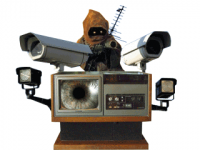
Tasman Richardson has been working with appropriated footage since the 90s and the “Jawa” style he developed has been adopted and imitated by a significant number of VJs and video artists. He works with potent sounds and images from commercial culture, which he cuts into small fragments and rhythmically reassembles. Richardson’s remix methods are rigorous and quite specific – designed to evoke a distinct emotional reaction from viewers. Jawa videos follow set standards regarding the number of frames that can be used in different cuts. There's also rules on how clips of particular durations should be combined. The clips are arranged rhythmically, but the visual and musical impact of the work are always operating simultaneously – neither ever takes priority over the other. In a Jawa video, the images you see are always accompanied by their original audio sources. Click here if you'd like to read Richardson's Jawa manifesto, which outlines his remixing influences and principles. As you watch a Jawa video it becomes impossible to mentally organize all of its rapid stimulus. Powerfully familiar images from mass culture replace each other so quickly that your brain gives up trying to sort them into any kind of narrative logic. The unrelenting rhythms and flashes of audiovisual stimulus create an overwhelming and numbing effect that is very hard to describe. Maybe it’s like watching your house burn down with fireworks going off in the background. Below are some youtube embeds of Tasman’s work, but if you’d like to see the videos in higher quality, you can visit his website at www.tasmanrichardson.com/video.htm UPDATE |
|
Blogs
Remixd
Digital Rights Ireland
Political Remix Video
This & That
Wreck & Salvage Blog
Imaginify.org
blogonandon
stanislas kazal underground blog
Niall Larkin
Recycled Cinema
Remix Theory
Art Threat
Lessig
JD Lasica
Blogorragh
Boing Boing
Darknet
Damien Mulley
Add a Blog
Categories
Remix Culture
Digital Rights
Copyright
Education
Business
Politics
Technology
Movies/TV
FilmMaking/Editing
Other
Recommended Reading
Add a Book

Pirate Cinema
Cory Doctorow
Republic, Lost: How Money Corrupte Congress -- And a Plan to Stop It.
Lawrence Lessig

Digital Copyright
Jessica Litman

The Video Vortex Reader
Edited by Giert Lovink and Sabine Niederer

Hillman Curtis on Creating Short Films for the Web
Hillman Curtis

Remix: Making Art and Commerce Thrive in the Hybrid Economy
Lawrence Lessig

Art of the Start
Guy Kawasaki

The Art of Innovation: Lessons in Creativity from IDEO, America's Leading Design Firm
Tom Kelley and Tom Peters

The Pirate' Dilemma
Matt Mason
Fans, Bloggers, and Gamers: Media Consumers in a Digital Age
Henry Jenkins

Promises to Keep
William W. Fisher

Copy Fights: The Future of Intellectual Property in the Information Age
Adam Thierer
The Future of Music
David Kusek, Gerd Leonhard
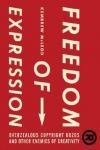
Freedom of Expression
Kembrew McLeod

The Future of Ideas
Lawrence Lessig

The Long Tail
Chris Anderson

The Cult of the Amateur
Andrew Keen

Convergence Culture
Henry Jenkins
Darknet: Hollywood's War Against the Digital Generation
JD Lasica
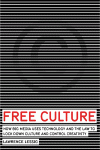
Free Culture
Lawrence Lessig

