









Italy to Censor Online Video Uploads
2010-01-16 14:35:52 Posted
by: ragaman7 Category: Copyright
[from IDG News Service, via SFGate.com, San Francisco Chronicle]
New rules to be introduced by government decree will require people who upload videos onto the Internet to obtain authorization from the Communications Ministry similar to that required by television broadcasters, drastically reducing freedom to communicate over the Web, opposition lawmakers have warned.
On Thursday opposition lawmakers held a press conference in parliament to denounce the new rules -- which require government authorization for the uploading of videos, give individuals who claim to have been defamed a right of reply and prevent the replay of copyright material -- as a threat to freedom of expression.
"The decree subjects the transmission of images on the Web to rules typical of television and requires prior ministerial authorization, with an incredible limitation on the way the Internet currently functions," opposition Democratic Party lawmaker Paolo Gentiloni told the press conference.
Article 4 of the decree specifies that the dissemination over the Internet "of moving pictures, whether or not accompanied by sound," requires ministerial authorization. Critics say it will therefore apply to the Web sites of newspapers, to IPTV and to mobile TV, obliging them to take on the same status as television broadcasters.
"Italy joins the club of the censors, together with China, Iran and North Korea," said Gentiloni's party colleague Vincenzo Vita.
The decree was also condemned by Articolo 21, an organization dedicated to the defense of freedom of speech as enshrined in article 21 of the Italian constitution. The group said the measures resembled an earlier government attempt to crack down on bloggers by imposing on them the same obligations and responsibilities as newspapers.
The group launched an appeal Friday entitled "Hands Off the Net," saying the restrictive measures would mark "the end of freedom of expression on the Web." The restrictions would prevent the recounting of the life of the Italians in moving pictures on the Internet, it said.
The decree was also criticized by Nicola D'Angelo, a commissioner in the Communications Authority, which would be likely to play a role in policing copyright violations under the new rules. The decree ran contrary to the spirit of the EU directive by extending the rules of television to online video material, D'Angelo said in a radio interview.
He also expressed concern at the requirement for government authorization for the uploading of videos to Internet. "Italy will be the only Western country in which it is necessary to have prior government permission to operate this kind of service," he said. "This aspect reveals a democratic risk, regardless of who happens to be in power."
Other critics described the decree as an expression of the conflict of interests of Silvio Berlusconi, who exercises political control over the state broadcaster RAI in his role as prime minister and is also the owner of Italy's largest private broadcaster, Mediaset.
They said the new copyright regulations would prevent Internet users from sharing snippets of popular TV shows or goals from the Italian soccer league, currently viewed online by millions of people.
Mediaset has successfully sued YouTube to obtain the removal of its copyright material, in particular video from the reality show "Big Brother," from the online video-sharing platform. A judge in a Rome civil court ordered the removal of the material last month, and the new decree is seen as providing further protection for Mediaset's online commercial interests.
Alessandro Gilioli, who writes a blog on the Web site of the weekly magazine L'Espresso, said the decree was intended to squelch future competition for Mediaset, which was planning to move into IPTV and therefore had an interest in reducing the number of independent videos circulating on the Web.
"It's the Berlusconi method: Kill your potential enemies while they are small. That's why anyone doing Web TV -- even from their attic at home -- must get ministerial approval and fulfill a host of other bureaucratic obligations," Gilioli wrote. He said the government was also keen to restrict the uncontrollable circulation of information over the Internet to preserve its monopoly over television news.
Paolo Romani, the deputy minister responsible for drafting the decree, insisted the text simply adopted the recommendations of the EU directive but said the government was prepared to discuss modifications. The decree did not intend to restrict freedom of information "or the possibility of expressing one's ideas and opinions through blogs and social networks," Romani told the ANSA news agency.
Read more: http://www.sfgate.com/cgi-bin/article.cgi?f=/g/a/2010/01/15/urnidgns852573C400693880002576AC005FDFB0.DTL#ixzz0cmnAfgd3 UPDATE |

|
Blogs
Remixd
Digital Rights Ireland
Political Remix Video
This & That
Wreck & Salvage Blog
Imaginify.org
blogonandon
stanislas kazal underground blog
Niall Larkin
Recycled Cinema
Remix Theory
Art Threat
Lessig
JD Lasica
Blogorragh
Boing Boing
Darknet
Damien Mulley
Add a Blog
Categories
Remix Culture
Digital Rights
Copyright
Education
Business
Politics
Technology
Movies/TV
FilmMaking/Editing
Other
Recommended Reading
Add a Book

Pirate Cinema
Cory Doctorow
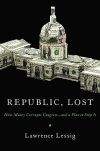
Republic, Lost: How Money Corrupte Congress -- And a Plan to Stop It.
Lawrence Lessig

Digital Copyright
Jessica Litman

The Video Vortex Reader
Edited by Giert Lovink and Sabine Niederer

Hillman Curtis on Creating Short Films for the Web
Hillman Curtis

Remix: Making Art and Commerce Thrive in the Hybrid Economy
Lawrence Lessig

Art of the Start
Guy Kawasaki

The Art of Innovation: Lessons in Creativity from IDEO, America's Leading Design Firm
Tom Kelley and Tom Peters

The Pirate' Dilemma
Matt Mason
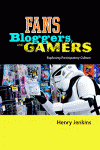
Fans, Bloggers, and Gamers: Media Consumers in a Digital Age
Henry Jenkins

Promises to Keep
William W. Fisher

Copy Fights: The Future of Intellectual Property in the Information Age
Adam Thierer
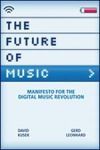
The Future of Music
David Kusek, Gerd Leonhard
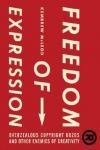
Freedom of Expression
Kembrew McLeod

The Future of Ideas
Lawrence Lessig

The Long Tail
Chris Anderson

The Cult of the Amateur
Andrew Keen

Convergence Culture
Henry Jenkins
Darknet: Hollywood's War Against the Digital Generation
JD Lasica
Free Culture
Lawrence Lessig

