









Google Defeats Viacom!
2010-06-24 13:45:23 Posted
by: ragaman7 Category: Copyright
[via Wired - by David Kravets]
Google-owned YouTube won a major victory Wednesday when a federal judge ruled the video-sharing site was protected under U.S. copyright law.
Viacom, which vowed an appeal, was seeking $1 billion in damages in a case testing the depths of copyright-infringement protection under the Digital Millennium Copyright Act of 1998.
The ruling, if it survives, is a boon for internet freedom, especially as it applies to search engines, video-hosting companies, picture-hosting services like Flickr, social-networking sites like Facebook and micro-blogging services such as Twitter. But it will make it all the more difficult for rights holders to protect their works.
In short, Wednesday’s decision says internet companies, even if they know they are hosting infringing material, are immune from copyright liability if they promptly remove works at a rights-holder’s request — under what is known as a takedown notice.
“Today’s decision isn’t just about YouTube,” said Center for Democracy & Technology lawyer David Sohn. “Without this decision, user generated content would dry up and the internet would cease to be a participatory medium.”
U.S. District Judge Louis L. Stanton of New York disagreed with Viacom’s claims that YouTube had lost the so-called “safe harbor” protection under the DMCA. Viacom, parent of Paramount Pictures and MTV, maintained Google did not qualify, because internal records showed Google was well aware its video-hosting site was riddled with infringing material posted by its users.
Stanton ruled that YouTube’s “mere knowledge” of infringing activity “is not enough.”
“To let knowledge of a generalized practice of infringement in the industry, or of a proclivity of users to post infringing materials, impose responsibility on service providers to discover which of their users’ postings infringe a copyright would contravene the structure and operation of the DMCA,” the judge wrote.
Stanton ruled that YouTube had no way of knowing whether a video was licensed by the owner, was a “fair use” of the material “or even whether its copyright owner or licensee objects to its posting.”
Stanton added, “Indeed, the present case shows that the DMCA notification regime works efficiently: When Viacom over a period of months accumulated some 100,000 videos and then sent one mass takedown notice on Feb. 2, 2007, by the next business day YouTube had removed virtually all of them.”
Jonathan Band, a copyright attorney who helped craft the DMCA, said “The argument Viacom was making would have neutered the DMCA. I think the judge understood that.”
The DMCA, which was heavily lobbied into existence by the Hollywood studios, has been a boon for internet freedom. But it has been a bust in other areas.
Among its provisions, it prohibits the circumvention of encryption technology. DVDs are encrypted with what is known as the Content Scramble System, and DVD players must secure a license to play discs. So a San Francisco federal judge ruled in March that RealNetworks breached the DMCA when it marketed a DVD-copying device, and precluded it from the market. Apple also claims the DMCA makes it unlawful to jailbreak iPhones.
The Motion Picture Association of America declined comment on Stanton’s decision.
What’s more, the DMCA’s “safe harbor” privilege comes with another price. The law demands intermediaries such as YouTube to take down content in response to a notice from rights holders, without evaluating the claim for reasonableness or accuracy, or considering the fair use rights of users. That has opened the door to many abuses of free expression, including Universal Music’s 2008 takedown notice to YouTube over a Pennsylvania woman’s 29-second video of her toddler dancing to Prince’s “Let’s Go Crazy.”
The YouTube-Viacom decision came nearly a year after a Los Angeles federal judge ruled similarly in a case against little-known, video-sharing site Veoh, which has gone bankrupt. The difference between Wednesday’s ruling and the Veoh outcome, Band said, is that YouTube is mainstream, used by millions daily and is owned by one of the world’s most popular and richest internet brands: Google.
Google, which purchased YouTube for $1.8 billion in 2006, hailed the decision, saying it was “an important victory not just for us, but also for the billions of people around the world who use the web to communicate and share experiences with each other.”
Viacom, which brought the case three years ago, said “We believe that this ruling by the lower court is fundamentally flawed and contrary to the language of the Digital Millennium Copyright Act.”
Judge Stanton ruled the Supreme Court’s 2005 decision against Grokster did not apply. He said Grokster distributed software that allowed computer-to-computer exchanges of infringing material, “with the expressed intent of succeeding to the business of the notoriously infringing Napster.”
Read More http://www.wired.com/threatlevel/2010/06/dmca-protects-youtube/#ixzz0rm2hJqPa UPDATE |
|
Blogs
Remixd
Digital Rights Ireland
Political Remix Video
This & That
Wreck & Salvage Blog
Imaginify.org
blogonandon
stanislas kazal underground blog
Niall Larkin
Recycled Cinema
Remix Theory
Art Threat
Lessig
JD Lasica
Blogorragh
Boing Boing
Darknet
Damien Mulley
Add a Blog
Categories
Remix Culture
Digital Rights
Copyright
Education
Business
Politics
Technology
Movies/TV
FilmMaking/Editing
Other
Recommended Reading
Add a Book

Pirate Cinema
Cory Doctorow
Republic, Lost: How Money Corrupte Congress -- And a Plan to Stop It.
Lawrence Lessig

Digital Copyright
Jessica Litman

The Video Vortex Reader
Edited by Giert Lovink and Sabine Niederer

Hillman Curtis on Creating Short Films for the Web
Hillman Curtis

Remix: Making Art and Commerce Thrive in the Hybrid Economy
Lawrence Lessig

Art of the Start
Guy Kawasaki

The Art of Innovation: Lessons in Creativity from IDEO, America's Leading Design Firm
Tom Kelley and Tom Peters

The Pirate' Dilemma
Matt Mason
Fans, Bloggers, and Gamers: Media Consumers in a Digital Age
Henry Jenkins

Promises to Keep
William W. Fisher

Copy Fights: The Future of Intellectual Property in the Information Age
Adam Thierer
The Future of Music
David Kusek, Gerd Leonhard
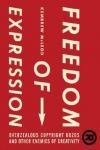
Freedom of Expression
Kembrew McLeod

The Future of Ideas
Lawrence Lessig

The Long Tail
Chris Anderson

The Cult of the Amateur
Andrew Keen

Convergence Culture
Henry Jenkins
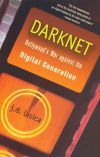
Darknet: Hollywood's War Against the Digital Generation
JD Lasica
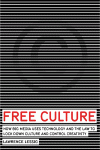
Free Culture
Lawrence Lessig

