









Fair Copyright for Canadians
2008-03-27 02:47:46 Posted
by: ragaman7 Category: Copyright
Michael Geist has come up with a manifesto for the Fair Copyright for Canadians group, which has gone from a standing start to more than 38,000 members in less than two months. His "Principles for Fair Copyright for Canadians" contains seven simple, commonsense statements about what a good Canadian (or any nation's) copyright law should look like. Here's the first three:
Anti-circumvention provisions should be directly linked to copyright infringement. The anti-circumvention provisions have been by far the most controversial element of the proposed reforms. The experience in the United States, where anti-circumvention provisions effectively trump fair use rights, provides the paradigm example of what not do to. It should only be a violation of the law to circumvent a technological protection measure (TPM) if the underlying purpose is to infringe copyright. Circumvention should be permitted to access a work for fair dealing or private copying purposes. This approach - which is similar (though not identical) to the failed Bill C-60 - would allow Canada to implement the World Intellectual Property Organization’s Internet treaties and avoid some of the negative "unintended consequences" that have arisen under the U.S. law.
No ban on devices that can be used to circumvent a TPM. Canada should not ban devices that can be used to circumvent a TPM. The reason is obvious - if Canadians cannot access the tools necessary to exercise their user rights under the Copyright Act, those rights are effectively extinguished in the digital world. If organizations are permitted to use TPMs to lock down content in a manner that threatens fair dealing, Canadians should have the right to access and use technologies that restores the copyright balance.
Expand the fair dealing provision by establishing "flexible fair dealing." Led by the United States, several countries around the world have established fair use provisions within their copyright laws (Israel being the most recent). The Supreme Court of Canada has already ruled that Canada's fair dealing provision must be interpreted in a broad and liberal manner. Yet the law currently includes a limited number of categories (research, private study, criticism, news reporting) that renders everyday activities such as recording television programs acts of infringement. The ideal remedy is to address other categories such as parody, time shifting, and format shifting by making the current list of fair dealing categories illustrative rather than exhaustive.
[by Cory Doctorow, BoingBoing.net]
UPDATE |

|
2008-01-29 00:01:50 Posted
by: ragaman7 Category: Remix Culture
When Lainy Voom first heard Sherwood Anderson's mysterious short story, "The Dumb Man", she says, "It stopped me in my tracks, made me absolutely still while I listened." It was about death and desire, and it refused easy understanding. "I like that it raises questions but the questions are never resolved." So the images it evoked lingered in her head for months, until she had her own answers to them. The result is a Second Life machinima, easily among the very most ambitious and mesmerizing works of the form. (from New World Notes)
UPDATE |

|
2008-01-13 21:52:54 Posted
by: ragaman7 Category: Remix Culture
From an announcement on Facebook:
Creative Commons founder and Stanford professor Lawrence Lessig is giving his final presentation on Free Culture, Copyright and the future of ideas at Stanford's Memorial Auditorium on January 31. After 10 years of enlightening and inspiring audiences around the world with multimedia presentations that inspired the Free Culture movement, Professor Lessig is moving on from the copyright debate and setting his sites on corruption in Washington.
Lessig is giving a final talk at Stanford University on the subject, and it is being recorded for the upcoming feature film "Basement Tapes," an open source documentary (see www.opensourcecinema.org).
Free admission.
Guests will also be treated to a sneak preview of some upcoming scenes from "Basement Tapes," and remixed work from the Open Source Cinema website.
UPDATE |

|
2008-01-09 16:47:59 Posted
by: ragaman7 Category: Remix Culture
The folks behind the excellent 'Steal This Film', a fantastic documentary about the copyright wars, have completed their second installment and it will screen in London on January 1
These are strange times indeed. While they continue to command so much attention in the mainstream media, the 'battles' between old and new modes of distribution, between the pirate and the institution of copyright, seem to many of us already lost and won. We know who the victors are. Why then say any more?
Because waves of repression continue to come: lawsuits are still levied against innocent people; arrests are still made on flimsy pretexts, in order to terrify and confuse; harsh laws are still enacted against filesharing, taking their place in the gradual erosion of our privacy and the bolstering of the surveillance state. All of this is intended to destroy or delay inexorable changes in what it means to create and exchange our creations. If STEAL THIS FILM II proves at all useful in bringing new people into the leagues of those now prepared to think 'after intellectual property', think creatively about the future of distribution, production and creativity, we have achieved our main goal.
UPDATE |

|
2008-01-09 16:23:16 Posted
by: ragaman7 Category: Copyright
When college kids make mashups of Hollywood movies, are they violating the law? Not necessarily, according to the latest study on copyright and creativity from the Center and American University’s Washington College of Law.
The study, Recut, Reframe, Recycle: Quoting Copyrighted Material in User-Generated Video, by Center director Pat Aufderheide and Peter Jaszi, co-director of the law school’s Program on Information Justice and Intellectual Property, shows that many uses of copyrighted material in today’s online videos are eligible for fair use consideration. The study points to a wide variety of practices—satire, parody, negative and positive commentary, discussion-triggers, illustration, diaries, archiving and of course, pastiche or collage (remixes and mashups)—all of which could be legal in some circumstances.
Fair use is the part of copyright law that permits new makers, in some situations, to quote copyrighted material without asking permission or paying the owners. The courts tell us that fair uses should “transformative,” – adding value to what they take and using it for a purpose different from that of original work. So when makers mash up several works—say, The Ten Commandments , Ben-Hur and 10 Things I Hate about You , making Ten Things I Hate about Commandments —they aren’t necessarily stealing. They are quoting in order to make a new commentary on popular culture, and creating a new piece of popular culture.
[ by Patricia Aufderheide at the Center for Social Media at the American University ] UPDATE |

|
2008-01-04 19:10:03 Posted
by: ragaman7 Category: Remix Culture
Had you been watching Czech Television on June 17, 2007, you might have seen what appeared to be a nuclear explosion on your television screen. A mountain resort in the Krkonose region of the Czech Republic appeared to go up in a mushroom cloud of smoke. The video was a hoax, cleverly perpetrated by Ztohoven, a local art group. They later released a statement on their MySpace page claiming responsibility for the event:
“We are neither a terrorist organization nor a political group, our aim is not to intimidate the society or manipulate it, which is something we witness on daily basis both in the real world and in the world created by the media…We hope our action will become an appeal for the future and remind the media of their duty to bring out the truth.”
The performance, entitled “Media Reality” sparked controversy throughout the country. The Czech National Gallery awarded the group with the newly created NG 333 prize for their work. ”This piece---alongside all of the art the group Ztohoven is making - is crossing the border from art into something more social. The artists are trying to escape from the cage of art, and into real life. They would like to influence their own lives, and other people’s lives.” The cash prize totaled approximately 333,000 KOR, or US$18,350.
Unfortunately, the project received scathing reviews from Czech Television, the station that was the unwilling host for the performance. According to Dusan Ondracek, state prosecutor, six of the members of Ztohoven group have been charged with scaremongering and spreading false information. The members, if convicted, could face up to three years in prison.
Ironically, it is not uncommon for media outlets to deliberately report false news. Traditionally April Fool’s Day makes it acceptable to publish fake stories---despite the spread of false information. One of the most infamous occasions of an April Fool’s report was the 1957 BBC report on the Swiss Spaghetti Harvest, where distinguished journalist Richard Dimbleby reported on the favourable season for spaghetti farmers in Europe. Hundreds of viewers contacted the BBC program to ask where they could get their own spaghetti bush. It is believed to be the first instance of television being used for an April Fools broadcast, but many media outlets both before and since, have been documented as having used their voice for a practical joke, including The Guardian and Sports Illustrated.
Perhaps, had Ztohoven carried out their performance two months earlier they wouldn’t be in the hot-water they are facing. What is more likely though, is that only the media believes they have the power to create false news, on April Fool’s Day or otherwise. [by Anikka Maya Weerasinghe - ArtThreat.Net] UPDATE |

|
2008-01-02 23:26:08 Posted
by: ragaman7 Category: Remix Culture
DJ Adrien and the Mysterious D have compiled an album of the 20 best music mash-ups, or 'bootlegs' of 2007. Some classics here, definitely worth a download. UPDATE |

|
2008-01-01 18:30:47 Posted
by: ragaman7 Category: Copyright
'How is that even remotely possible? The medium certainly looks alive, well and, if anything, overpopulated. There are hordes of photographers out there, working with back-to-basics pinhole cameras and pixeled images measured in gigabytes, with street photography taken by cell phones and massive photo "shoots" whose crews, complexity and expense resemble those of movie sets. Step into almost any serious art gallery in Chelsea, Santa Monica or Mayfair and you're likely to be greeted with breathtaking large-format color photographs, such as Andreas Gefeller's overhead views of parking lots digitally montaged from thousands of individual shots or Didier Massard's completely "fabricated photographs" of phantasmagoric landscapes. And the establishment's seal of approval for photography has been renewed in two current museum exhibitions. In "Depth of Field"— the first installation in the new contemporary-photography galleries at the Metropolitan Museum of Art in New York, on display through March 23—the fare includes Thomas Struth's hyperdetailed chromogenic print of the interior of San Zaccaria in Venice and Adam Fuss's exposure of a piece of photo paper floating in water to a simultaneous splash and strobe.' [by Peter Plagens, Newsweek]
UPDATE |

|
2007-12-29 13:13:20 Posted
by: ragaman7 Category: Digital Rights
LOS ANGELES — In the recording industry’s latest move away from its reliance on digital locks to reduce piracy, the Warner Music Group said on Thursday that it would sell songs and albums without anticopying software through Amazon’s fledgling digital music service.
The shift by Warner Music is another step in the decline of copy-protection software, which has led to consumer confusion over the jumble of incompatible schemes governing the use of digital music players and downloaded songs.
Warner is the third of the four major music corporations to reconsider its use of so-called digital rights management software, known by its initials as D.R.M., and offer its catalog in the unrestricted MP3 format. Sony BMG Music Entertainment has continued to hold out, though it is expected to experiment with selling MP3s through a promotion early next year. [Jeff Leeds - New York Times] UPDATE |

|
2007-12-27 18:44:10 Posted
by: ragaman7 Category: Remix Culture
The former Talking Head, David Byrne, interviewed Thom Yorke of Radiohead for Wired about Radiohead’s online-album experiment. Interestingly, though, a companion piece by Mr. Byrne, about how artists should navigate the troubled and chaotic music industry, is getting the most attention (wired.com).
Skip to next paragraph
Alex Eben Meyer
The economics of falling costs are transforming the music industry, just as they are transforming the Web business. “Now an album can be made on the same laptop you use to check e-mail,” Mr. Byrne wrote. And thanks to digitized music, distribution “is pretty much free.” [Dan Mitchell]
UPDATE |

|


Blogs
Remixd
Digital Rights Ireland
Political Remix Video
This & That
Wreck & Salvage Blog
Imaginify.org
blogonandon
stanislas kazal underground blog
Niall Larkin
Recycled Cinema
Remix Theory
Art Threat
Lessig
JD Lasica
Blogorragh
Boing Boing
Darknet
Damien Mulley
Add a Blog
Categories
Remix Culture
Digital Rights
Copyright
Education
Business
Politics
Technology
Movies/TV
FilmMaking/Editing
Other
Recommended Reading
Add a Book

Pirate Cinema
Cory Doctorow
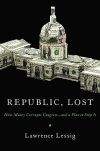
Republic, Lost: How Money Corrupte Congress -- And a Plan to Stop It.
Lawrence Lessig

Digital Copyright
Jessica Litman

The Video Vortex Reader
Edited by Giert Lovink and Sabine Niederer

Hillman Curtis on Creating Short Films for the Web
Hillman Curtis

Remix: Making Art and Commerce Thrive in the Hybrid Economy
Lawrence Lessig

Art of the Start
Guy Kawasaki

The Art of Innovation: Lessons in Creativity from IDEO, America's Leading Design Firm
Tom Kelley and Tom Peters

The Pirate' Dilemma
Matt Mason

Fans, Bloggers, and Gamers: Media Consumers in a Digital Age
Henry Jenkins

Promises to Keep
William W. Fisher

Copy Fights: The Future of Intellectual Property in the Information Age
Adam Thierer
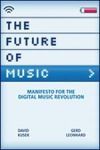
The Future of Music
David Kusek, Gerd Leonhard
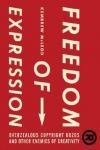
Freedom of Expression
Kembrew McLeod

The Future of Ideas
Lawrence Lessig

The Long Tail
Chris Anderson

The Cult of the Amateur
Andrew Keen

Convergence Culture
Henry Jenkins
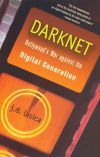
Darknet: Hollywood's War Against the Digital Generation
JD Lasica
Free Culture
Lawrence Lessig

