









Supreme Court Blocks Pirate Bay
2010-06-24 01:12:01 Posted
by: ragaman7 Category: Copyright
[via zeropaid.com by Jared Moya] This ruling paves the way for copyright holders to obtain court orders to force ISPs to block other sites they accuse of copyright infringement.
Denmark’s Supreme Court has ruled that ISP Telenor must continue to block customers’ access to Swedish BitTorrent tracker site The Pirate Bay.
In its ruling The Supreme Court emphasizes the importance of “the large-scale infringement of intellectual property rights” that takes place through The Pirate Bay website, and stresses that the right holders have a “substantial interest that is important to protect” in bringing this infringement to a halt.
“The court’s decision is commendably clear. It confirms that the ISP’s are part of the solution to the piracy problem,” says the International Federation of the Phonographic Industry’s (IFPI) lead attorney, Johan Schlüter. “The decision is an important step in the right holders’ efforts to create an efficient market for movies, music and literature on the Internet. It is crucial to the continued growth and success of the legal services that the illegal services are restricted as much as possible.”
The decision follows a years-long court battle that began with an initial lower court ruling back in February of 2008 where a judge found that Telenor, then Tele2, was assisting in the facilitation of copyright infringement by allowing its customers to access the site.
“The communication with the Pirate Bay is not in itself a violation of copyright,” countered Jens Ottosen-Stott, chairman of TI, the Danish telecom industry, and Danish Telia’s Legal Director at the time. “We make communication possible for our subscribers, then have others to take a position on whether it is illegal or not, and intervene. It is not our job.”
The decision means that perhaps other sites that the IFPI accuses of copyright infringement could find themselves suddenly blocked by the Denmark’s ISPs.
“The consequence may be that there will be a major push by the IFPI’s of the world to attempt to have similar websites blocked,” said Nicholai Kramer Pfeiffer, Telenor’s Regulatory Chief.
And he’s he right. Now that the IFPI has managed to block The Pirate Bay it will pretty much have free reign to have any other site blocked that it accuses of copyright infringement.
“Freedom of expression is at risk and at this rate will ultimately destroy the internet as we know it,” says Troels Møller, spokesperson for Piratgruppen, a non-partisan group supporting file-sharing,
free speech and privacy, in a press release.
Danish IT experts, though you don’t have to be an expert to know it only takes seconds to bypass any ISP-level site blocking system, have also criticized the ruling, and are concerned that the number of blocked sites will slowly grow over time.
“It’s a slippery slope,” said Mikkel Svendsen deMib. “And when the people maintaining these lists find out that it still doesn;t restrict their access to The Pirate Bay or some of the many other BitTorrent sites, they will go after additional measures.”
The IFPI realizes that people will still be able to access the site, and doesn’t seem to care. It thinks the real message of the ruling is that illegal downloading is harmful to society. It also won’t say what sites are next, but says that the ruling now gives it the power to go after any site it sees with “systematic copyright violation.”
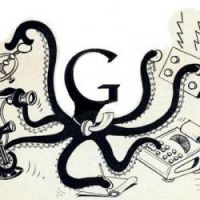
Could Google be next? UPDATE |

|
2010-06-14 18:51:28 Posted
by: ikat381 Category: Copyright
The LOFI RE/Mixed festival is streaming right now: http://www.lofilounge.org/live/ It's streaming in HTML5 so you should watch it in Firefox UPDATE |
|
2010-05-24 15:34:42 Posted
by: ikat381 Category: Remix Culture
League of Independents (LOFI) is holding their RE/Mixed media festival on May 30th 2010 in Brooklyn. The festival features a bunch of great video remixes. Here's some details from http://www.lofilounge.org/ About The Festival Sunday, May 30th 2010; 2 PM Galapagos Art Space, 16 Main Street DUMBO, Brooklyn FREE! (21 and over) The RE/Mixed Media Festival is our way of contributing to the ongoing conversation about remixing, mashups, copyright law, fair use, and the freedom of artists to access their culture in order to add to and build upon it. While there are numerous events addressing these issues, they are usually discussion-based, featuring lectures and panel discussions about policy. We believe that one of the best ways to make the general public aware of these types of issues is by demonstrating all the types of art and culture that remix touches. To that end, on May 30th we will transform Galapagos into a multimedia art space... ...Throughout the day, we will feature remixed film and video dating back to the first remixers like Joseph Cornell (1936) to contemporary “vidders” utilizing 21st century technology to remix media content as cultural commentary, and machinima artists whose art consists using video game technology to construct new narratives. UPDATE |

|
2010-05-16 00:16:08 Posted
by: ikat381 Category: Copyright
The 2010 Open Video Conference (OVC) has posted a call for participation. The deadline is June 7th, 2010 at 11:59 PM EST: "We are now accepting proposals for panels, presentations, workshop sessions, demo sessions, and other programming for the next Open Video Conference in New York City. Join us and over 1000 participants during our groundbreaking two-day conference and take part in the discussions that are driving the future of the online video medium." More info at http://www.openvideoconference.org/2010/05/ovc-2010-call-for-participation UPDATE |

|
2010-05-02 09:11:20 Posted
by: ragaman7 Category: Copyright
[from TimesOnline, by Struan Robertson]
They say that there are two things you should never see made: laws and sausages. As a tiny group of MPs debated the Digital Economy Act this week, the stomachs of an online audience turned.
This was an Act passed on the votes of hundreds of MPs who didn't even attend those debates and proposed by politicians whose correspondence showed a lack of understanding of even the most basic terms used in the debate.
This law should never have been passed. Regardless of your view on whether copyright infringing websites should be blocked or infringing users cut off from the internet, this was no way to pass such a controversial and sweeping piece of legislation.
It was subjected to the 'wash up' process, a pre-election rush-through designed to pass uncontroversial, uncontested Bills before Parliaments dissolve. It is not meant for a law like this one.
This is a law which will introduce powers that could see households or coffee shops disconnected from the web on accusations of file-sharing and internet service providers forced to block access to websites that are deemed likely to infringe copyright. Nobody knows how these powers will be used because the detail is unwritten.
It is a powerful law, one that rules on some fairly basic digital rights and has potentially massive implications for citizens and businesses alike.
Yet very few MPs turned up for the hurried debates. Far more turned up afterwards, just to vote it through.
The debates were watched live online and silently heckled by thousands of Twitter users, many of whom were witnessing the strange operation of the Parliamentary machine for the very first time. They named and shamed the MPs who did not show; they accused most speakers of failing to understand all things digital; they applauded the law's most informed critic, Labour's Tom Watson, who was tweeting from the backbenches; and they vented their frustration at being unable to stop the machine. Perhaps these feelings will be reflected in ballot boxes on 6 May.
MPs from all parties acknowledged that the Bill was faulty yet they pledged their support for its passage. Shadow culture secretary Jeremy Hunt called it "a weak, dithering and incompetent attempt to breathe life into Britain's digital economy." But Hunt voted for it. He said that if the Conservatives come to power, his party will fix any problems with the Bill, "if it turns out that the legislation is flawed." That is not the way to make a law.
Whether you supported the Act's principles or not, they are undeniably significant. It deserved proper debate and proper scrutiny but it received neither. It should not have been passed.
UPDATE |

|
2010-04-25 21:51:06 Posted
by: ikat381 Category: Politics
(This [slightly modified] piece first appeared in the French TV listings magazine Télérama, 4 October 2000) If I say that culture is in danger today, if I say that it is threatened by the rule of money and commerce and by a mercenary spirit that takes many forms – audience ratings, market research, pressure from advertisers, sales figures, the best-seller list – it will be said that I am exaggerating. If I say that politicians, who sign international agreements consigning cultural works to the common fate of interchangeable commodities subject to the same laws that apply to corn, bananas, or citrus fruit, are contributing (without always knowing it) to the abasement of culture and minds, it will be said that I am exaggerating. If I say that publishers, film producers, critics, distributors, and heads of TV and radio stations, who rush to submit to the law of commercial circulation, that of the pursuit of bestsellers, media stars, and of the production and glorification of success in the short term and at all costs, but also to the law of the circular exchange of worldly favors and concessions – if I say that all of them are collaborating with the imbecile forces of the market and participating in their triumph, it will be said that I am exaggerating.And yet… If I recall now that the possibility of stopping this machine lies with all those who, having some power over cultural, artistic, and literary matters, can, each in their own place and their own fashion, and to however small an extent, throw their grain of sand into the well-oiled machinery of resigned complicities; and if, lastly, I add that those who have the good fortune to have accounts on Totalrecut would, by conviction and tradition, be among the best placed to do this, it will be said perhaps, for once, that I am being desperately optimistic. And yet… UPDATE |

|
2010-03-29 19:30:15 Posted
by: ragaman7 Category: Remix Culture
The Rocketboom Institute for Internet Studies examines the phenomenon of Auto-Tune with help from special guest Professor "Weird Al" Yankovic!
UPDATE |
_1.jpg)
|
2010-03-29 18:43:57 Posted
by: ragaman7 Category: Copyright
An article in The New Republic by Lawrence Lessig...
In early 2002, the filmmaker Grace Guggenheim--the daughter of the late Charles Guggenheim, one of America’s greatest documentarians, and the sister of the filmmaker Davis Guggenheim, who made An Inconvenient Truth-decided to do something that might strike most of us as common sense. Her father had directed or produced more than a hundred documentaries. Some of these were quite famous (Nine from Little Rock). Some were well-known even if not known to be by him (Monument to a Dream, the film that plays at the St. Louis arch). Some were forgotten but incredibly important for understanding American history in the twentieth century (A Time for Justice). And some were just remarkably beautiful (D-Day Remembered). So, as curator of his work, Grace Guggenheim decided to remaster the collection and make it all available on DVD, which was then the emerging platform for film.
Her project faced two challenges, one obvious, one not. The obvious challenge was technical: gathering fifty years of film and restoring it digitally. The non-obvious challenge was legal: clearing the rights to move this creative work onto this new platform for distribution. Most people might be puzzled about just why there would be any legal issue with a child restoring her father’s life’s work. After all, when we decide to repaint our grandfather’s old desk, or sell it to a neighbor, or use it as a workbench or a kitchen table, no one thinks to call a lawyer first. But the property that Grace Guggenheim curates is of a special kind. It is protected by copyright law.
Documentaries in particular are property of a special kind. The copyright and contract claims that burden these compilations of creativity are impossibly complex. The reason is not hard to see. A part of it is the ordinary complexity of copyright in any film. A film is made up of many different creative elements--music, plot, characters, images, and so on. Once the film is made, any effort at remaking it--moving it to DVD, for example--could require clearing permissions for each of these original elements. But documentaries add another layer of complexity to this already healthy thicket, as they typically also include quotations, in the sense of film clips. So just as a book about Franklin Delano Roosevelt by Jonathan Alter might have quotes from famous people talking about its subject, a film about civil rights produced in the 1960s would include quotations--clips from news stations--from famous people of the time talking about the issue of the day. Unlike a book, however, these quotations are in film--typically, news footage from CBS or NBC.
Whenever a documentarian wanted to include these clips in his film, he would ask CBS or NBC for permission. Most of the time, at least for a healthy fee, CBS and NBC and everyone else was happy to give permission so as to be included. Sometimes they wanted to see first just how the clip would be used. Sometimes they would veto a particular use in a particular context. But in the main there was a healthy market for securing permission to quote. The lawyers flocked to this market for permission. (That’s their nature.) They drafted agreements to define the rights that the quoter would get.
I suspect that most filmmakers never thought for a second about how odd this “permission to quote” was. After all, does an author need to get permission from The New York Times when she quotes an article in a book about the Depression? Indeed, does anyone need permission from anyone when quoting public statements, at least in a work talking about those statements? Ordinarily, one would think that this sort of “use” is “fair,” under the rules of copyright at least. But most documentarians--indeed, most filmmakers--did not care to work through the complexity and the uncertainty of a doctrine such as “fair use.” Instead they agreed to licenses that govern--exclusively, as they typically asserted--the rights to use the quotes that were in the film. So, for example, the license would insist that the only right to use the film came from the license itself (not fair use). And it would then specify the scope and term of the right--five years, North American distribution, for educational use.
What that agreement means is that if the filmmaker wanted to continue to distribute the film after five years, he would have to go back to the original rights holder and ask for permission again. That task may not sound so difficult if you think about one clip in one documentary. But what about twenty, thirty, or more? And even assuming that you can find the original holders of the rights, they now have you over a barrel--as the owners of the famous series Eyes on the Prize discovered. Jon Else, the producer and cinematographer for the series, described the problem in 2004 (extraordinary efforts have now resolved it):
[The series] is no longer available for purchase. It is virtually the only audiovisual purveyor of the history of the civil rights movement in America. What happened was the series was done cheaply and had a terrible fundraising problem. There was barely enough to purchase a minimum five-year rights on the archive-heavy footage. Each episode in the series is fifty percent archival. And most of the archive shots are derived from commercial sources. The five-year licenses expired and the company that made the film also expired. And now we have a situation where we have this series for which there are no rights licenses. Eyes on the Prize cannot be broadcast on any TV venue anywhere, nor can it be sold. Whatever threadbare copies are available in universities around the country are the only ones that will ever exist. It will cost five hundred thousand dollars to re-up all the rights for this film.
As American University’s Center for Social Media concluded, “rights clearance costs are high, and have escalated dramatically in the last two decades,” and “limit the public’s access” to documentary film. The consequence of this ecology of creativity is that the vast majority of documentaries from the twentieth century cannot legally be restored or redistributed. They sit on film library shelves, many of them dissolving, since they were produced on nitrate-based film, and most of them forgotten, since no content company or anyone else can do anything with them. In this sense, most of these works have been made orphans by a set of agreements concluded at their birth, which--like lead in gasoline--were introduced without any public recognition of their inevitable toxicity.
Except of course for those with a devoted heir, such as Grace Guggenheim. She was not willing to accept defeat. Instead she set herself the extraordinary task of clearing all of the rights necessary to permit her father’s films to be shown. Eight years later, she is largely done. About ten major works remain. Just last year, her father’s most famous documentary--Robert Kennedy Remembered, made in 1968 in the two months between Kennedy’s assassination and the Democratic National Convention, and broadcast only once--was cleared for DVD release through the Robert F. Kennedy Memorial Center.
READ FULL TEXT
UPDATE |
|
2010-02-03 13:47:29 Posted
by: ragaman7 Category: Copyright

|
2010-01-16 14:35:52 Posted
by: ragaman7 Category: Copyright
[from IDG News Service, via SFGate.com, San Francisco Chronicle]
New rules to be introduced by government decree will require people who upload videos onto the Internet to obtain authorization from the Communications Ministry similar to that required by television broadcasters, drastically reducing freedom to communicate over the Web, opposition lawmakers have warned.
On Thursday opposition lawmakers held a press conference in parliament to denounce the new rules -- which require government authorization for the uploading of videos, give individuals who claim to have been defamed a right of reply and prevent the replay of copyright material -- as a threat to freedom of expression.
"The decree subjects the transmission of images on the Web to rules typical of television and requires prior ministerial authorization, with an incredible limitation on the way the Internet currently functions," opposition Democratic Party lawmaker Paolo Gentiloni told the press conference.
Article 4 of the decree specifies that the dissemination over the Internet "of moving pictures, whether or not accompanied by sound," requires ministerial authorization. Critics say it will therefore apply to the Web sites of newspapers, to IPTV and to mobile TV, obliging them to take on the same status as television broadcasters.
"Italy joins the club of the censors, together with China, Iran and North Korea," said Gentiloni's party colleague Vincenzo Vita.
The decree was also condemned by Articolo 21, an organization dedicated to the defense of freedom of speech as enshrined in article 21 of the Italian constitution. The group said the measures resembled an earlier government attempt to crack down on bloggers by imposing on them the same obligations and responsibilities as newspapers.
The group launched an appeal Friday entitled "Hands Off the Net," saying the restrictive measures would mark "the end of freedom of expression on the Web." The restrictions would prevent the recounting of the life of the Italians in moving pictures on the Internet, it said.
The decree was also criticized by Nicola D'Angelo, a commissioner in the Communications Authority, which would be likely to play a role in policing copyright violations under the new rules. The decree ran contrary to the spirit of the EU directive by extending the rules of television to online video material, D'Angelo said in a radio interview.
He also expressed concern at the requirement for government authorization for the uploading of videos to Internet. "Italy will be the only Western country in which it is necessary to have prior government permission to operate this kind of service," he said. "This aspect reveals a democratic risk, regardless of who happens to be in power."
Other critics described the decree as an expression of the conflict of interests of Silvio Berlusconi, who exercises political control over the state broadcaster RAI in his role as prime minister and is also the owner of Italy's largest private broadcaster, Mediaset.
They said the new copyright regulations would prevent Internet users from sharing snippets of popular TV shows or goals from the Italian soccer league, currently viewed online by millions of people.
Mediaset has successfully sued YouTube to obtain the removal of its copyright material, in particular video from the reality show "Big Brother," from the online video-sharing platform. A judge in a Rome civil court ordered the removal of the material last month, and the new decree is seen as providing further protection for Mediaset's online commercial interests.
Alessandro Gilioli, who writes a blog on the Web site of the weekly magazine L'Espresso, said the decree was intended to squelch future competition for Mediaset, which was planning to move into IPTV and therefore had an interest in reducing the number of independent videos circulating on the Web.
"It's the Berlusconi method: Kill your potential enemies while they are small. That's why anyone doing Web TV -- even from their attic at home -- must get ministerial approval and fulfill a host of other bureaucratic obligations," Gilioli wrote. He said the government was also keen to restrict the uncontrollable circulation of information over the Internet to preserve its monopoly over television news.
Paolo Romani, the deputy minister responsible for drafting the decree, insisted the text simply adopted the recommendations of the EU directive but said the government was prepared to discuss modifications. The decree did not intend to restrict freedom of information "or the possibility of expressing one's ideas and opinions through blogs and social networks," Romani told the ANSA news agency.
Read more: http://www.sfgate.com/cgi-bin/article.cgi?f=/g/a/2010/01/15/urnidgns852573C400693880002576AC005FDFB0.DTL#ixzz0cmnAfgd3 UPDATE |

|


Blogs
Remixd
Digital Rights Ireland
Political Remix Video
This & That
Wreck & Salvage Blog
Imaginify.org
blogonandon
stanislas kazal underground blog
Niall Larkin
Recycled Cinema
Remix Theory
Art Threat
Lessig
JD Lasica
Blogorragh
Boing Boing
Darknet
Damien Mulley
Add a Blog
Categories
Remix Culture
Digital Rights
Copyright
Education
Business
Politics
Technology
Movies/TV
FilmMaking/Editing
Other
Recommended Reading
Add a Book

Pirate Cinema
Cory Doctorow
Republic, Lost: How Money Corrupte Congress -- And a Plan to Stop It.
Lawrence Lessig

Digital Copyright
Jessica Litman

The Video Vortex Reader
Edited by Giert Lovink and Sabine Niederer

Hillman Curtis on Creating Short Films for the Web
Hillman Curtis

Remix: Making Art and Commerce Thrive in the Hybrid Economy
Lawrence Lessig

Art of the Start
Guy Kawasaki

The Art of Innovation: Lessons in Creativity from IDEO, America's Leading Design Firm
Tom Kelley and Tom Peters

The Pirate' Dilemma
Matt Mason

Fans, Bloggers, and Gamers: Media Consumers in a Digital Age
Henry Jenkins

Promises to Keep
William W. Fisher

Copy Fights: The Future of Intellectual Property in the Information Age
Adam Thierer
The Future of Music
David Kusek, Gerd Leonhard
Freedom of Expression
Kembrew McLeod

The Future of Ideas
Lawrence Lessig

The Long Tail
Chris Anderson

The Cult of the Amateur
Andrew Keen

Convergence Culture
Henry Jenkins
Darknet: Hollywood's War Against the Digital Generation
JD Lasica
Free Culture
Lawrence Lessig

