









Android Open Source Project
2009-05-28 10:02:33 Posted
by: ragaman7 Category: Technology
The Open Handset Alliance, a group of 47 technology and mobile companies who have come together to accelerate innovation in mobile applications, have developed an open source mobile development platform, called Android.
Android™ delivers a complete set of software for mobile devices: an operating system, middleware and key mobile applications. The Android Software Development Kit (SDK) is now available.
Open
Android was built from the ground-up to enable developers to create compelling mobile applications that take full advantage of all a handset has to offer. It was built to be truly open. For example, an application can call upon any of the phone's core functionality such as making calls, sending text messages, or using the camera, allowing developers to create richer and more cohesive experiences for users. Android is built on the open Linux Kernel. Furthermore, it utilizes a custom virtual machine that was designed to optimize memory and hardware resources in a mobile environment. Android is open source; it can be liberally extended to incorporate new cutting edge technologies as they emerge. The platform will continue to evolve as the developer community works together to build innovative mobile applications.
All applications are created equal
Android does not differentiate between the phone's core applications and third-party applications. They can all be built to have equal access to a phone's capabilities providing users with a broad spectrum of applications and services. With devices built on the Android Platform, users are able to fully tailor the phone to their interests. They can swap out the phone's homescreen, the style of the dialer, or any of the applications. They can even instruct their phones to use their favorite photo viewing application to handle the viewing of all photos.
Breaking down application boundaries
Android breaks down the barriers to building new and innovative applications. For example, a developer can combine information from the web with data on an individual's mobile phone -- such as the user's contacts, calendar, or geographic location -- to provide a more relevant user experience. With Android, a developer can build an application that enables users to view the location of their friends and be alerted when they are in the vicinity giving them a chance to connect.
Fast & easy application development
Android provides access to a wide range of useful libraries and tools that can be used to build rich applications. For example, Android enables developers to obtain the location of the device, and allows devices to communicate with one another enabling rich peer-to-peer social applications. In addition, Android includes a full set of tools that have been built from the ground up alongside the platform providing developers with high productivity and deep insight into their applications.
UPDATE |

|
2009-05-27 22:11:14 Posted
by: ragaman7 Category: Copyright
What is the Free Software Pact?
The Free Software Pact is a citizen initiative to coordinate a European scale campaign in favour of Free Software. We will provide material and software to any volunteer who want to contribute to the initiative.
What are the objectives of the Free Software Pact?
The Free Software Pact is a simple document with which candidates can inform the voting public that they favor the development and use of Free Software, and will protect it from possible threatening EU legislation. The Free Software Pact is also a tool for citizens who value Free Software to educate candidates about the importance of Free Software and why they should, if elected, protect the European Free Software community.
Who made this possible?
Since 2007, French association April has sensitized candidates to political elections about Free Software related issues through the Candidats.fr initiative. The Candidats.fr initiative was part of the presidential and legislative campaigns in 2007, and continued during the 2008 campaign for city and department elections. Today 72 signatories are members of the French National Assembly.
Associazione per il software libero started the campaign "caro candidato" in 2006. The campaign was first updated in occasion of the 2008 political elections and further in 2009 in occasion of the Sardinia regional elections. Joining forces was a natural step for the 2 free software associations that offer their technological platform to allow the spreading of the campaign in other european nations. UPDATE |
|
2009-05-24 15:13:11 Posted
by: ragaman7 Category: Copyright
Pater Jaszi, professor of Law at the American University in Washington is one of the founders of the Digital Future coalition, an important organisation that has been attempting to reach a balance between content owners and user interests since the DMCA was first proposed and subsequently enacted. www.dfc.org
The Digital Future Coalition (DFC) is committed to striking an appropriate balance in law and public policy between protecting intellectual property and affording public access to it. The DFC is the result of a unique collaboration of many of the nation's leading non-profit educational, scholarly, library, and consumer groups, together with major commercial trade associations representing leaders in the consumer electronics, telecommunications, computer, and network access industries. (Click here for a list of our members.) Since its inception, the DFC has played a major role -- domestically and internationally -- in the ongoing debate regarding the appropriate application of intellectual property law to the emerging digital network environment.
The DFC was forged in 1995 in response to the release of the Clinton administration's White Paper on Intellectual Property and the National Information Infrastructure. The White Paper recommended significantly altering existing copyright law to increase the security of ownership rights for creators of motion pictures, publishers and others in the proprietary community. Members of the DFC recognized that if the policy proposals delineated in the White Paper were implemented, educators, businesses, libraries, consumers and others would be severely restricted in their efforts to take advantage of the benefits of digital networks.
In 1995-96, Congress debated legislation (NII Copyright Protection Act) to implement the changes listed in the White Paper. This legislation ultimately stalled as the 104th Congress closed in the fall of 1996, in part because the DFC and other concerned parties helped to demonstrate that the bill did not provide for adequate balance between ownership and access rights, and a domestic consensus did not yet exist on how to update copyright law.
In addition to its domestic legislative and policy efforts, representatives of the DFC and its members attended a December 1996 conference of the World Intellectual Property Organization (WIPO) that was called to revise the primary international copyright treaty -- the Berne Convention -- for the digital age. The DFC worked to ensure that any agreements reached during the conference did not limit existing rights provided for under U.S. copyright law, and did not affect the ability of the United States to establish new rights to benefit the public interest. The DFC successfully participated in the creation and adoption of agreements that explicitly recognized the need to protect copyright owners, encourage information distributors, and assure public access to information. LINK
UPDATE |
|
2009-05-18 20:39:05 Posted
by: ragaman7 Category: Copyright
The Center for Social Media at the American University of Washington have put together this little video explaining the previously released Code of Best Practices in Fair Use for Online Video, which we have mentioned on the blog before. Hoping to see many more of these in the future.
Here's the press release from the AU:
American University’s Center for Social Media and AU Washington College of Law's Program on Information Justice and Intellectual Property, in collaboration with Stanford Law School's Fair Use Project, are launching a new video explaining how online video creators can make remixes, mashups, and other common online video genres with the knowledge that they are staying within copyright law.
The video, titled Remix Culture: Fair Use Is Your Friend, explains the Code of Best Practices in Fair Use for Online Video, a first of its kind document—coordinated by AU professors Pat Aufderheide and Peter Jaszi—outlining what constitutes fair use in online video. The code was released July 2008.
“This video lets people know about the code, an essential creative tool, in the natural language of online video. The code protects this emerging zone from censorship and self-censorship,” said Aufderheide, director of the Center for Social Media and a professor in AU's School of Communication. “Creators, online video providers, and copyright holders will be able to know when copying is stealing and when it’s legal.”
Like the code, the video identifies six kinds of unlicensed uses of copyrighted material that may be considered fair, under certain limitations. They are:
• Commenting or critiquing of copyrighted material • Use for illustration or example • Incidental or accidental capture of copyrighted material • Memorializing or rescuing of an experience or event • Use to launch a discussion • Recombining to make a new work, such as a mashup or a remix, whose elements depend on relationships between existing works For instance, a blogger’s critique of mainstream news is commentary. The fat cat sitting on the couch watching television is an example of incidental capture of copyrighted material. Many variations on the popular online video “Dramatic Chipmunk” may be considered fair use because they recombine existing work to create new meaning. “The fair use doctrine is every bit as relevant in the digital domain as it has been for almost two centuries in the print environment,” said Jaszi, founder of the Program for Information Justice and Intellectual Property and a professor of law in AU's Washington College of Law. “Here we see again the strong connection between the fair use principle in copyright and the guarantee of freedom of speech in the Constitution.” Remix Culture: Fair Use Is Your Friend is a collaborative project of the Center for Social Media—a center of AU's School of Communication—and the Program on Information Justice and Intellectual Property—a program of AU's Washington College of Law—along with Stanford Law School's Fair Use Project. It was funded by Google. UPDATE |

|
2009-05-18 16:29:35 Posted
by: ragaman7 Category: Copyright
Dark Night of the Soul — a project headed up by Danger Mouse, Sparklehorse and David Lynch that features contributions from the Shins’ James Mercer, Black Francis, the Strokes’ Julian Casablancas, the Flaming Lips and Iggy Pop, as well as a 100+ book of Lynch’s photographs — is on sale now at DNotS.com. However, in a weird twist, instead of getting music with the set, buyers instead will receive a blank CD-R.
“All copies will be clearly labeled: ‘For Legal Reasons, enclosed CD-R contains no music. Use it as you will,’ ” a spokesperson for Danger Mouse said. “Due to an ongoing dispute with EMI, Danger Mouse is unable to release the recorded music for Dark Night Of The Soul without fear of being sued by EMI.”
The disagreement between Danger Mouse and EMI likely roots back to the Jay-Z/Beatles mash-up The Grey Album he made in 2004. The brilliant combination of The White Album with The Black Album catapulted DM (real name Brian Burton) from bedroom producer to international star, but it came with a price: it infuriated the massive label group, which controls the rights to the Beatles’ recordings.
Sparklehorse are under contract with EMI, and Danger Mouse produced albums like Gorillaz’s Demon Days and the Good, the Bad and the Queen’s self-titled debut for labels under the EMI umbrella, so it’s unclear why the lawsuit would trouble the release now. “Danger Mouse remains hugely proud of Dark Night Of The Soul and hopes that people lucky enough to hear the music, by whatever means, are as excited by it as he is,” the spokesperson said. The album has actually leaked, and there’s a legal stream at NPR’s site. [from RollingStone.com] UPDATE |

|
2009-05-14 20:27:23 Posted
by: ragaman7 Category: Copyright
The European Parliament has agreed to extend musical copyrights from 50 to 70 years, just in time to safeguard The Beatles' music for another two decades. Parliament also suggested that a similar extension might be good for the movie business, too.
The European Parliament late last week agreed to extend musical copyrights from their current 50-year term to 70 years. So all that early rock 'n roll about to pass into the public domain? Don't count on using it in your documentary for another two decades—and there's nothing to say that the term won't be extended again.
While the vote is a big victory for the music labels who can continue to market major artists like The Beatles (let's face it, the obscure stuff from the 1950s isn't selling in measurable quantities anymore, and it's not playing on the radio), the movie industry looks set to cash in soon, too. In passing the term extension, Parliament also asked the European Commission "to launch an impact assessment of the situation in the European audiovisual sector by January 2010, with a view to deciding whether a similar copyright extension would benefit the audiovisual world."
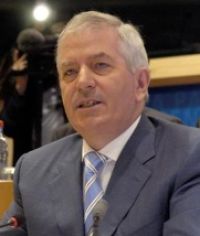
The current musical term extension push began in February 2008, when European Commissioner Charlie McCreevy of Ireland announced his support for a near doubling of the term of protection from 50 to 95 years. The move was opposed by countries like the UK, which would only go along with a maximum term of 70 years, so the European Parliament eventually agreed to go with the lower number.
While dropping 25 years from the proposal has a whiff of "compromise" about it, it's never been clear why any sort of term extension should be passed. The whole issue was looked at quite carefully by the UK's Andrew Gowers during his hugely publicized report on intellectual property. Gowers concluded in 2006 that no such term extension was needed—at which point the labels simply shifted their focus away from national governments to the EU.
But Gowers was operating in a UK context; groups of continental academics have come to similar conclusions when looking at the data. One group, headed by Prof. P. Bernt Hugenholtz of the University of Amsterdam, found that a copyright term extension would be a bad idea with costs for consumers, competitors, and society as a whole. Despite being commissioned, paid for, and published by the European Commission, Hugenholtz's work wasn't even mentioned when McCreevy made his proposal (though music industry work was considered).
This led Hugenholtz to blast off an angry letter about a process which "seems to reveal an intention to mislead the council and the Parliament, as well as the citizens of the European Union. In doing so the Commission reinforces the suspicion, already widely held by the public at large, that its policies are less the product of a rational decision-making process than of lobbying by stakeholders."
Another group of academics fired off an open letter to the Times of London in which they complained that the new plan would only pad the pockets of "record companies, aging rock stars or, increasingly, artists' estates. It does nothing for innovation and creativity."
But forget Gowers and European academics—what claim do those pushing the idea of term extension make? The official legislative dossier tells us: "Once their performance fixed in a phonogram is no longer protected, around 7,000 performers in any of the big Member States and a correspondingly smaller number in the smaller Member States will lose all of their income that derives from contractual royalties and statutory remuneration claims from broadcasting and public communication of their performances in bars and discotheques."
A tremendous loss to the German public domain is therefore enacted in order to help, for example, just 7,000 performers in all of Germany. And how much will these musicians make? According to Commissioner McCreevy, an average of just €2,000 a year.
But, according to the UK-based Open Rights Group, this isn't about session musicians anyway. Writing in the Telegraph recently, the group's executive director said, "That argument is hard to swallow. Firstly, two-thirds of the money that a recording generates is made in the first six years after publication. We might conclude that if artists want to survive in their later years, record companies should ensure they invest in a pension, not depend of the vague hope of earnings from ancient recordings.
"Secondly, an analysis of the figures shows where the money really ends up. About 80 percent will go to recording companies. Of the rest, nearly all would go to big stars, and a very small percentage to the small artists the Directive claims to be all about."
Another UK academic at the University of Bournemouth says that a slightly lower 70 percent of all new revenues will go to the record labels, not the performers; in any event, most of the money goes to labels that have already had five decades to profit from the songs in question. Under the new law, artists could regain their rights to songs that are no longer offered for sale to the public, but in the era of digital distribution, why wouldn't a label just throw its whole back catalog up on iTunes?
The extension still needs approval by the European Council (made up of the EU member states), but the only real sticking point there appears to have been the 95-year period. With the term reduced to 70 years, that measure looks set to pass into law.
When the UK government balked last month at the 95-year term, British music trade group BPI called on the government "to match its supportive rhetoric with concrete action, by moving heaven and earth to reach an agreement under this EU Presidency that will deliver an improved term of copyright for performers and music companies."
Heaven and earth appeared to have been moved, all in the name of "harmonization" of copyright terms. Only a day before the vote last week, international music trade group IFPI made the harmonization point clearly:
"Europe has always prided itself on being a champion of culture, yet the EU is lagging behind many other parts of the world when it comes to protecting its recordings," it said. "European artists, performers and producers are provided with a 50 year period of protection for their work to enable them to benefit from the recordings they have made. This is a much lower level of protection than many other countries around the world which provide for between 60 and 95 years' protection."
Even within the EU, terms are grossly unequal in duration (authors get life plus 70 years, for instance, for their books). While this might sounds like an argument for "harmonizing" terms downward, it never is; harmonization moves only in the upward direction. It's a transparent strategy that Big Content has been pushing for years—encourage countries to extend copyright terms, then browbeat others into following suit by going on about "competitive disadvantage."
As for the public domain, there's no point even arguing about it—such groups simply take it for granted that copyright is a natural state and that "falling out of copyright" is an obvious evil.
As IFPI put it last week, "More treasures of Europe's recorded music heritage are falling out of copyright every year. These are the recordings which have contributed so much to Europe's reputation for creativity and cultural diversity. With today's longer life spans, artists and performers are beginning to see their recordings falling into the public domain in their lifetime. Every year, an increasing number of artists are being deprived of part of their income."
But deprivation goes both ways. Every time that a term extension is passed, the public is deprived of the chance to remix, mashup, sample, share, and otherwise build upon the cultural work of a half century before.
[by Nate Anderson, ArsTechnica.com] UPDATE |
|
2009-05-14 09:35:05 Posted
by: ragaman7 Category: Digital Rights
A message from Kalle Lasn, founder of Adbusters:
A LEGAL TUSSLE FOR THE RIGHT TO COMMUNICATE
Every human being has the unassailable right to seek, receive and impart information without hindrance.
This right, enshrined in Article 19 of the Universal Declaration of Human Rights, is something for which we at Adbusters have been fighting since our inception. Our not-for-profit group, Adbusters Media Foundation, was born 20-years ago in response to broadcaster censorship that refused to run our citizen-produced ads. Over the last two decades, we have been censored by television networks all over the world and we have launched numerous legal actions in Canada against the Canadian Broadcasting Corporation (CBC) and private broadcasters (notably CanWest Global), fighting for the right of citizens to walk into their local TV stations and buy 30 seconds of airtime for a message they believe in.
For 20 years we were knocked back at every stage: we were defeated in the lower courts and the Supreme Court of Canada refused to hear our appeals. But last April, we finally scored a great legal victory. In a unanimous decision, the British Columbia Court of Appeal overturned previous court rulings and concluded that television airtime may indeed constitute public space. This crucial ruling allows Adbusters to proceed with its groundbreaking case against media conglomerates.
In order to take our fight to the next stage, we need an immediate injection of funds. We are asking for donations from people all over the world who believe that information rights are the key to a flourishing democracy and that those rights are now more imperative than ever in giving citizens a voice in navigating our path through the dangerous times ahead.
To donate, please visit www.adbusters.org/donate ... or send a cheque to Adbusters Media Foundation ... or give us a call at 604-736-9401/1-800-663-1243 (toll free in North America). As Adbusters has subscribers in 20 countries around the world, we are also trying to get in touch with media lawyers in the US, Australia and the UK who are interested in launching Right To Communicate legal actions in their own countries.
If you have ideas, need more information or want to talk strategy, email kono@adbusters.org.
for the wild, Kalle Lasn Editor and Co-founder, Adbusters Media Foundation UPDATE |

|
2009-05-13 23:56:31 Posted
by: ragaman7 Category: Remix Culture
The big six are largely responsible for many of the problems facing amateur creators and remix artists today. Often referred to as 'the big media' companies, it really comes down to six conglomerates who are trying to own pretty much everything we see, hear, read and use. They are: The Walt Disney Company, General Electric, News Corp., Time Warner, Viacom and CBS. LINK UPDATE |

|
2009-05-13 18:03:33 Posted
by: ragaman7 Category: Copyright
You may have heard about the French Assembly passing Sarkozy's mad "three-strikes" bill, which will allow big media companies to force ISPs to disconnect you by accusing you of copyright infringement (without even having to produce proof). Jeremie Zimmermann, a leading French activist opposed to the bill, has a good analysis of the problems it will face, even having passed:
* HADOPI is legally dead because it opposes to fundamental principles of French and European law, including the respect of a fair trial, principle of proportionality and separation of powers. European Parliament has also for the 4th time recalled its opposition to the French text by voting again amendment 138/464, thus voiding the French HADOPI. The law is also not respecting requirements of French constitution regarding a due process, equality in front of the law, and legality of the law, which the Constitutional Court will now have to judge.
* HADOPI is technically dead because it entirely relies on identifying users through their IP address that can be altered or high-jacked in many ways 5. As a consequence, innocents will inevitably be sanctioned. Circumvention techniques are also already largely available.
* HADOPI is dead in the media because government's propaganda didn't stand for long under close scrutiny from citizens over the net6 and to the aware consideration of a few critical elected representatives.7. A fantastic movement opposing the text allowed public debate to interfere in every possible part of the French web about the real stakes of the funding of creation in the digital age. Today, 60% of the French reject this text according to an IFOP poll8 (33% only agree to the scheme) and a wide opposition includes independent movie theaters, hundreds of independent labels, science-fiction authors and performing artists.
* Finally, HADOPI is dead politically, right in the middle of an "Hadopigate " revealing unhealthy collusion between Minister of culture and big media close to the president Sarkozy, everybody within the majority already understood that this text is a ball and chain they will have to drag along for a long time. [from boingboing.net] UPDATE |

|
2009-05-09 17:00:28 Posted
by: ragaman7 Category: Copyright
A group of Canadian copyfighters produced this mini-documentary, "C-61," about the proposed new Canadian copyright law, which the US government is pressuring Canada to pass (that's why the USA added Canada to a nonsensical list of pirate nations). Previous attempts to pass this bill have been a disgrace -- famously, former Industry Minister Jim Prentice refused to discuss the bill with Canadian record labels, artists, tech firms, or telcos, but did meet with American and multinational entertainment and software giants to allow them to give their input. In the bill's earlier incarnation as C-60, its sponsor, Sam Bulte, was caught taking campaign contributions from the same US and multinational entertainment companies, and went berserk at a town hall meeting when questioned about it, decrying "user-rights zealots and EFF members." [from BoingBoing.net] UPDATE |

|


Blogs
Remixd
Digital Rights Ireland
Political Remix Video
This & That
Wreck & Salvage Blog
Imaginify.org
blogonandon
stanislas kazal underground blog
Niall Larkin
Recycled Cinema
Remix Theory
Art Threat
Lessig
JD Lasica
Blogorragh
Boing Boing
Darknet
Damien Mulley
Add a Blog
Categories
Remix Culture
Digital Rights
Copyright
Education
Business
Politics
Technology
Movies/TV
FilmMaking/Editing
Other
Recommended Reading
Add a Book

Pirate Cinema
Cory Doctorow
Republic, Lost: How Money Corrupte Congress -- And a Plan to Stop It.
Lawrence Lessig

Digital Copyright
Jessica Litman

The Video Vortex Reader
Edited by Giert Lovink and Sabine Niederer

Hillman Curtis on Creating Short Films for the Web
Hillman Curtis

Remix: Making Art and Commerce Thrive in the Hybrid Economy
Lawrence Lessig

Art of the Start
Guy Kawasaki

The Art of Innovation: Lessons in Creativity from IDEO, America's Leading Design Firm
Tom Kelley and Tom Peters

The Pirate' Dilemma
Matt Mason

Fans, Bloggers, and Gamers: Media Consumers in a Digital Age
Henry Jenkins

Promises to Keep
William W. Fisher

Copy Fights: The Future of Intellectual Property in the Information Age
Adam Thierer
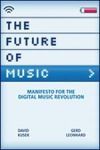
The Future of Music
David Kusek, Gerd Leonhard
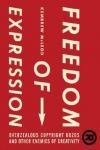
Freedom of Expression
Kembrew McLeod

The Future of Ideas
Lawrence Lessig

The Long Tail
Chris Anderson

The Cult of the Amateur
Andrew Keen

Convergence Culture
Henry Jenkins
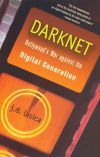
Darknet: Hollywood's War Against the Digital Generation
JD Lasica
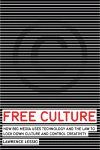
Free Culture
Lawrence Lessig

